
Who is the Holy Spirit? Gifts, fruits and what he does
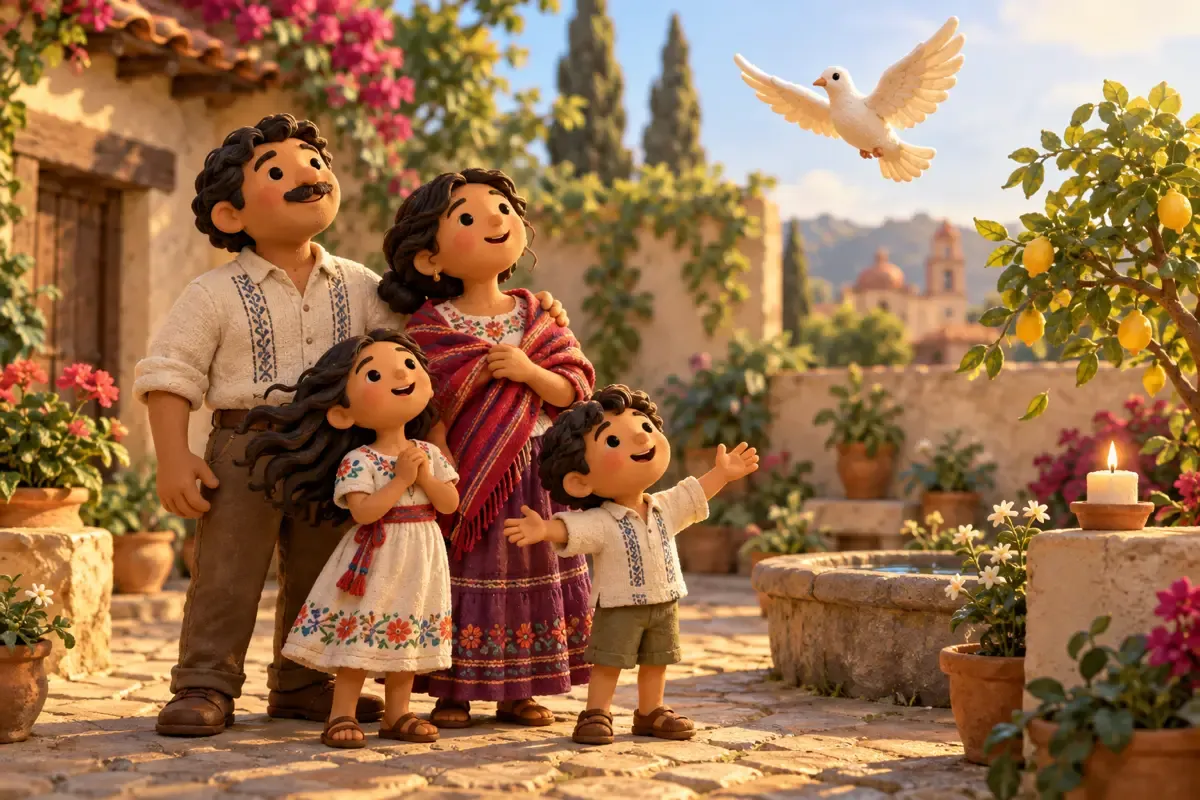
The Holy Spirit is God. He is the Third Person of the Holy Trinity: one God in three Persons, the Father, the Son and the Holy Spirit. He is not a force or a feeling but Someone: a Person who loves, comforts and guides us. Jesus promised to send him, and at Pentecost he came down on the apostles. He has lived in us since our Baptism.
Who is the Holy Spirit? Is the Holy Spirit a person?
Catholics believe in one God in three Persons. The Holy Spirit is the third: he is God just as the Father and the Son are, just as eternal and powerful, and with them he is worshiped and glorified. He is not less than they are, and he did not come later. The Creed says he proceeds from the Father and the Son: he is the love that has always united the Father and the Son.
Yes, he is a Person, not an energy or a force. That is why the Bible says he teaches, speaks, comforts, and can be grieved (John 14:26; Ephesians 4:30): only someone can do that. We can talk to him, as we talk to the Father and to Jesus.
His name already says a lot. In Hebrew, the word for spirit, ruah, means breath and wind. Jesus also called him the Paraclete, which means the one called to our side: the Comforter, the one who defends us. And he called him the Spirit of truth, because he teaches us and reminds us of everything Jesus said (John 14:16-17, 26). Older English Bibles and prayers call him the Holy Ghost; it is the same Holy Spirit.
The symbols of the Holy Spirit
We can’t see the Holy Spirit, but the Bible and the Church show him with pictures that children understand right away. Each one says something about what he does.
The dove
When Jesus was baptized in the Jordan River, the Spirit came down on him like a dove (Matthew 3:16). The dove also recalls the one that came back to Noah’s ark with an olive branch (Genesis 8:11): the sign of God’s peace.
Fire
At Pentecost, something like tongues of fire rested on the apostles (Acts 2:3). Fire gives light and warmth and changes whatever it touches: so the Spirit sets love alight in us and gives us courage.
Wind and breath
Pentecost began with a sound like a mighty wind (Acts 2:2), and the risen Jesus breathed on his disciples when he gave them the Spirit (John 20:22). We can’t see the wind, but we see what it moves: so it is with the Spirit.
Water
In Baptism, water is the sign of the new life the Spirit gives us. Jesus spoke of rivers of living water, and the Gospel explains that he meant the Spirit (John 7:38-39).
Oil
Kings and prophets were anointed with oil. Christ means the Anointed One, the one filled with the Spirit. That is why we are anointed with sacred chrism, a perfumed oil, in Baptism and in Confirmation.
The Catechism also names the cloud and the light, the seal, the hand, and the finger of God.
What does the Holy Spirit do?
The Creed calls him the Lord, the giver of life. He was there at creation, when the spirit of God moved over the waters (Genesis 1:2), and he spoke through the prophets. By the power of the Holy Spirit, the Virgin Mary conceived Jesus (Luke 1:35).
At Pentecost, fifty days after Easter, he came down on the apostles gathered with Mary, and those frightened men went out to proclaim Jesus without fear. That is why Pentecost is called the birthday of the Church. Since then the Spirit has guided the Church and acted in the sacraments.
And he acts in each of us. We receive him in Baptism, and Confirmation strengthens us with him. Saint Paul says our body is a temple of the Holy Spirit (1 Corinthians 6:19). He helps us pray when we don’t know what to say (Romans 8:26), comforts us, gives us courage to do good, and gives us his seven gifts. When we let him work, his fruits show in our lives: love, joy, peace, patience and many more.
What are the seven gifts of the Holy Spirit?
The gifts are seven: wisdom, understanding, counsel, fortitude, knowledge, piety and fear of the Lord. The list comes from the prophet Isaiah, who foretold them of the Messiah (Isaiah 11:2-3). The Holy Spirit gives them in Baptism and strengthens them in Confirmation, so that we follow what he prompts in us.
What are the fruits of the Holy Spirit?
The fruits are the good things the Spirit grows in us when we let him work. Saint Paul names several (Galatians 5:22-23), and the Church’s tradition counts twelve: charity, joy, peace, patience, kindness, goodness, generosity, gentleness, faithfulness, modesty, self-control and chastity. The gifts are like seeds; the fruits are what shows when they grow.
What is blasphemy against the Holy Spirit?
Jesus said that every sin can be forgiven, but that blasphemy against the Holy Spirit will not be forgiven (Matthew 12:31-32; Mark 3:28-29). These words frighten many people, but the Church explains what they mean: it is not a bad word said in a moment of anger.
God’s mercy has no limits. The sin against the Holy Spirit is refusing it on purpose: refusing to repent and shutting the door on the forgiveness the Holy Spirit offers. God never stops offering forgiveness; it is the person who will not receive it, and staying that way to the end would mean being lost forever. If someone is worried they have committed it, that very worry shows their heart is still open to God: all they need to do is ask for forgiveness, and that is what confession is for.
Praying to the Holy Spirit
The simplest prayer to the Holy Spirit is to ask him to come, and you can do it in your own words, at any moment. The Church also has a traditional prayer, “Come, Holy Spirit”, and the hymn “Come, Creator Spirit” (Veni Creator Spiritus), sung above all at Pentecost. Every time we make the Sign of the Cross or pray the Glory Be, we name him with the Father and the Son.
As a family
Before something hard, like a test, a visit to the doctor or a difficult conversation, ask the Holy Spirit together to come and help, in a few short words: “Come, Holy Spirit.” At dinner, share whether anyone noticed his help during the day.
To read more, the Catechism of the Catholic Church, paragraphs 243, 245, 246, 685, 689, 691, 692, 694, 695, 696, 701, 703, 731, 733, 741, 1303, 1830, 1831, 1832, 1864, 2671.
This topic in Rosal
In the app, this lesson teaches this topic:
- “The Holy Spirit, giver of life”Unit 2: God the Father and the Trinity. Taught by Saint John of the Cross.
Every lesson starts with a saint’s story and comes with two or three questions that give the Catechism paragraph, one small thing to do at home, and a version for children 6 to 10. Units 2 to 6 are part of Patron. Unit 1 and all 20 feast lessons are free.
More of what we believe
- The Apostles’ Creed (Catholic): full text and what it means
- What is faith? What it means to believe in God
- Books of the Bible in order: how many, how they are grouped
- What is the Holy Trinity? Three Persons, one God, explained
- The Virgin Mary: who she is and why Catholics honor her
- What is Confirmation? Catholic meaning, age and gifts
- What is OCIA? How adults become Catholic (OCIA vs RCIA)
- Who is my guardian angel? What guardian angels are and do
- What is original sin? Catholic teaching, simply explained
- The catechism, explained for families