
What is OCIA? How adults become Catholic (OCIA vs RCIA)
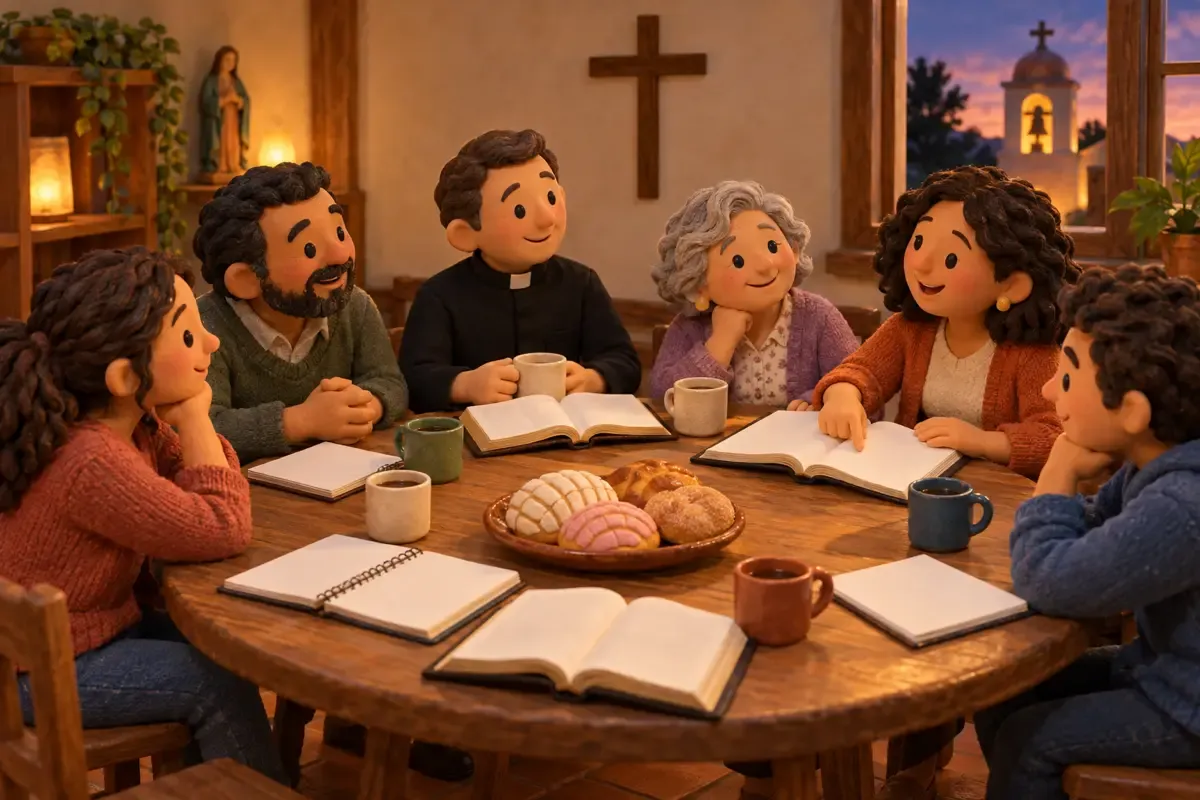
OCIA, the Order of Christian Initiation of Adults, is the process by which adults prepare to become Catholic. Until recently it was called RCIA, the Rite of Christian Initiation of Adults. It moves through stages, with celebrations in the parish, and usually reaches its high point at the Easter Vigil, when those not yet baptized receive Baptism, Confirmation and First Communion. To begin, just talk to your parish.
What is OCIA?
In the first centuries, people who wanted to become Christians prepared for a long time, called the catechumenate, with teaching, prayer and rites in stages. The Second Vatican Council restored it for adults, and the ritual book that guides it was published in 1972. It is not a course you pass but a journey of conversion with the parish community alongside: you learn the faith, learn to pray, and begin to live as a disciple of Jesus.
OCIA vs RCIA: why the name changed
It is the same process under a new name. RCIA stood for the Rite of Christian Initiation of Adults. In 2021 the U.S. bishops approved a new English translation called the Order of Christian Initiation of Adults, OCIA, in use since late 2024 and required since 2025. Order translates the book’s Latin title, Ordo, more closely, as the Church’s other recent ritual books do, and it fits: the book holds not one rite but a whole series of rites spread over time. In Spanish the name stays RICA, the Ritual de la Iniciación Cristiana de Adultos.
Who is OCIA for?
The process is adapted to each person’s situation:
Adults who are not baptized
Someone who has never been baptized is called a catechumen during their preparation, and receives the three sacraments of initiation in a single celebration: Baptism, Confirmation and the Eucharist.
Christians baptized in another church
Someone validly baptized in another Christian community is not baptized again, because Baptism is received only once. They prepare to be received into full communion with the Catholic Church, with a profession of faith, Confirmation (unless they have already received it validly, as Orthodox Christians do at their Baptism) and the Eucharist.
Catholics who never completed their initiation
An adult baptized Catholic as a child who never made their First Communion or Confirmation can also prepare at the parish, often alongside the OCIA group.
Children of school age
Children of about seven and older who were not baptized as babies follow a similar path, adapted to their age.
What are the stages of OCIA?
The ritual describes a journey in four periods, separated by three steps celebrated in the parish. Each parish organizes it in its own way, but the order is this:
1. Inquiry (the precatechumenate)
A time to hear about Jesus, ask questions and get to know the parish, with no commitment. People in this period are called inquirers.
First step: entering the catechumenate
When the person decides to go on, the parish welcomes them in a simple celebration, and from that day they are a catechumen: already part of the Church’s family, though not yet baptized.
2. The catechumenate
The longest period, often a year or more: learning the faith, praying, taking part in Sunday Mass and beginning to live as a disciple, with a sponsor and the community.
Second step: the Rite of Election
At the start of Lent, usually on the First Sunday and often at the cathedral, the bishop chooses the catechumens who are ready for the Easter sacraments, and they write their names in the Book of the Elect. From then on they are called the elect.
3. Purification and enlightenment
Lent becomes a retreat of preparation, with prayer and conversion. On the Third, Fourth and Fifth Sundays the scrutinies are celebrated, prayers of the community asking God to free them from evil and strengthen them. In the weeks after the first and the third, the Church presents them with the Creed and the Lord’s Prayer.
Third step: the Easter Vigil
On the holy night of Easter, the elect receive Baptism, Confirmation and First Communion. Baptized Christians who have been preparing are received into full communion with the Church, often that same night.
4. Mystagogy
Through Easter Time, until Pentecost, the new Catholics, called neophytes, go deeper into the sacraments they have received and their place in the community. In truth, the journey goes on for life.

How do you start OCIA?
Talk to your parish: call the parish office or ask the priest after Mass about OCIA. You don’t need to know a lot or have all the answers: the first period is exactly for asking questions. Many parishes start their groups in the fall, but each person moves at their own pace.
If you or your spouse were married before, tell the priest from the start: sometimes the marriage situation needs to be resolved first, and the parish will walk with you through it.
As a family
If someone you know is preparing to enter the Church, pray for them as a family during Lent, and if you can, go to the Easter Vigil to see them receive the sacraments. It is one of the most beautiful nights of the year.
To read more, the Catechism of the Catholic Church, paragraphs 1229, 1230, 1232, 1233, 1247, 1248, 1249, 1259, 1271, 1272.
Is there a lesson in Rosal?
Rosal has no lesson on this topic. The nearest one is:
- “Faith: saying yes to God”Unit 1: We search for God, and God speaks. Taught by Mary, Our Lady.
It teaches what faith is, the first step of this whole journey, through Mary’s yes.
Every lesson starts with a saint’s story and comes with two or three questions that give the Catechism paragraph, one small thing to do at home, and a version for children 6 to 10. Unit 1 is free.
More of what we believe
- The Apostles’ Creed (Catholic): full text and what it means
- What is faith? What it means to believe in God
- Books of the Bible in order: how many, how they are grouped
- What is the Holy Trinity? Three Persons, one God, explained
- Who is the Holy Spirit? Gifts, fruits and what he does
- The Virgin Mary: who she is and why Catholics honor her
- What is Confirmation? Catholic meaning, age and gifts
- Who is my guardian angel? What guardian angels are and do
- What is original sin? Catholic teaching, simply explained
- The catechism, explained for families