
What is faith? What it means to believe in God
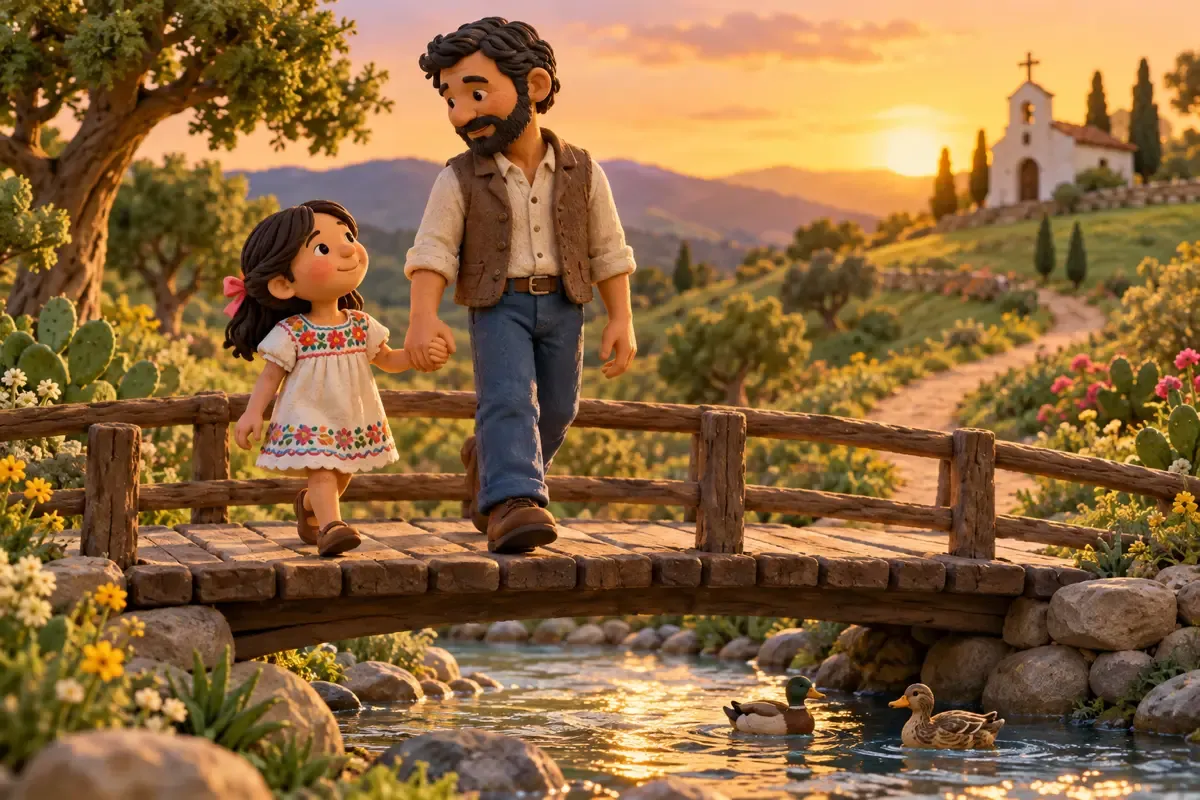
Faith is trusting God and believing what he has told us, because he is truth itself and cannot deceive us. It is a gift from God, who places it in us at Baptism, and it is also our own free answer: saying yes to him. It is not a feeling, or a vague idea that everything will turn out fine. It is relying on Someone, the way a child relies on her father when he takes her hand to cross a bridge.
What is faith? What does it mean to believe in God?
God invites us to be his friends, and faith is our answer to that invitation: listening to God and putting ourselves in his hands. Believing in God is more than thinking he exists. It is trusting him, and letting what he tells us change our lives.
Faith has two sides that belong together. It is trusting a Person, God, and it is accepting as true what he has revealed. We believe not because we have checked everything for ourselves, but because God tells us, and he can neither be mistaken nor lie. That is why faith is surer than any human knowledge. What we believe is summed up in the Creed.
What is faith according to the Bible?
The Letter to the Hebrews describes faith as being sure of what we hope for and convinced of what we do not see (Hebrews 11:1). Then it walks through the story of people who lived that way, from Abel and Noah to Abraham and Moses: people who trusted God before they saw his promises come true (Hebrews 11).
Saint Paul calls it the obedience of faith (Romans 1:5): not blind obedience, but the obedience of someone listening to a person they know loves them. And Jesus praised the faith of those who came to him with trust, like the centurion who asked him to heal his servant (Matthew 8:5-13).
A gift from God and an answer of ours
Faith is a gift: no one can believe by their own strength alone, and the Holy Spirit helps us from within. We receive it at Baptism, together with hope and charity. That is why it is called a theological virtue: it comes from God and leads us to him.
But God forces no one to believe. Faith is also a free and very human act: each of us says “I believe” with our mind and our will. Jesus invited people to believe; he never forced them. And no one believes alone: we receive the faith from the Church, the way a child learns to speak from his mother, and we pass it on to others.
Like everything alive, faith can grow or fade. It grows when we feed it with the Word of God, prayer, the sacraments and love for others.
Is faith without works dead?
Yes, the apostle James says so: a faith that doesn’t show in what we do, that sees a brother hungry and doesn’t help him, is dead (James 2:14-26). This does not mean we earn heaven by our own effort: salvation is God’s gift, received through faith (Ephesians 2:8-9). It means that true faith turns into love.
Saint Paul sums it up: what counts is faith working through love (Galatians 5:6). The Church teaches that faith without hope and charity does not fully unite us to Christ. For children it can be said simply: if we believe God loves us, it has to show in how we treat others.
Abraham and Mary, models of faith
Abraham left his homeland because God asked him to, without knowing where he was going (Hebrews 11:8), and he believed he would have as many descendants as there are stars in the sky (Genesis 15:5-6). That is why he is called the father of all who believe.
Mary is the most perfect model. When the angel told her she would be the mother of Jesus, she asked how this could be, and then she said yes (Luke 1:26-38). Elizabeth called her blessed for having believed (Luke 1:45). Her faith never wavered, not even at the foot of the cross.
Does faith go against reason?
No. Faith and reason come from the same God, and God cannot tell us one thing by faith and the opposite by reason. Faith seeks understanding: the better we know what we believe, the firmer it grows. That is why the Church encourages study and research, and why it makes sense to learn the faith, ask questions and look for answers, with children too.
What if I have doubts?
Having questions is not losing your faith. Mary asked the angel an honest question, and many saints went through dark times when God seemed far away: Saint Teresa of Calcutta lived that way for many years. Faith is often lived without seeing, and it is tested by suffering. Asking in order to understand better is one thing; refusing on purpose what God has revealed is another.
When doubts come, it helps to pray, to ask someone who knows, and to keep walking with the Church, the way you keep holding a trusted hand even when the path grows dark.
How do you pass the faith on to children?
The Church calls the family the domestic church, and parents the first to proclaim the faith to their children. Children learn to believe above all by seeing others believe: they see their parents pray, say sorry, go to Mass and help others, and that teaches them more than many words.
Small, everyday things help: a prayer before meals and another at bedtime, the Sign of the Cross when leaving home, a story from the Bible or about a saint, answering their questions calmly (and looking for the answer together when we don’t know it), and Sunday Mass as a family. Faith is caught more than it is taught.
As a family
Tell your children about a time you had to trust God without knowing how something would turn out, and how it turned out. Then ask them whom they trust, and why. At bedtime, ask God together, in your own words, to increase your faith.
To read more, the Catechism of the Catholic Church, paragraphs 142, 143, 144, 146, 148, 149, 150, 153, 154, 157, 158, 159, 160, 162, 164, 165, 166, 167, 1656, 1814, 1815, 2088, 2225, 2226.
This topic in Rosal
In the app, this lesson teaches this topic:
- “Faith: saying yes to God”Unit 1: We search for God, and God speaks. Taught by Mary, Our Lady.
Every lesson starts with a saint’s story and comes with two or three questions that give the Catechism paragraph, one small thing to do at home, and a version for children 6 to 10. Unit 1 is free.
More of what we believe
- The Apostles’ Creed (Catholic): full text and what it means
- Books of the Bible in order: how many, how they are grouped
- What is the Holy Trinity? Three Persons, one God, explained
- Who is the Holy Spirit? Gifts, fruits and what he does
- The Virgin Mary: who she is and why Catholics honor her
- What is Confirmation? Catholic meaning, age and gifts
- What is OCIA? How adults become Catholic (OCIA vs RCIA)
- Who is my guardian angel? What guardian angels are and do
- What is original sin? Catholic teaching, simply explained
- The catechism, explained for families