December 16
Las Posadas
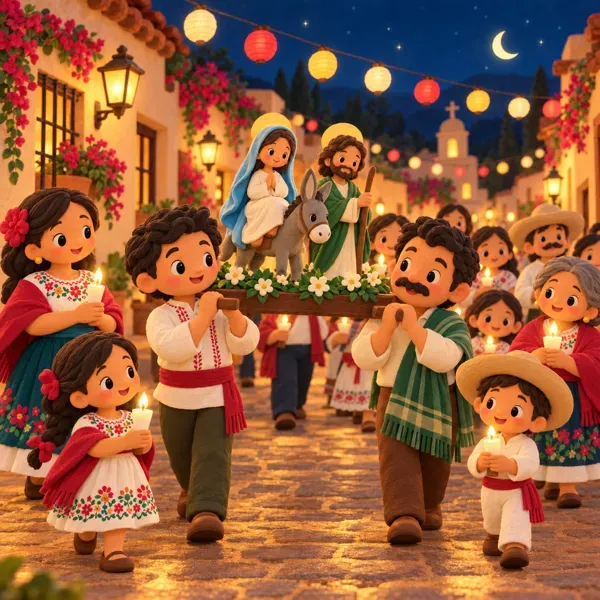
In Mexico and in many other Spanish-speaking countries, the nine nights from 16 to 24 December are the posadas. Neighbors and families gather at dusk and walk in a little procession with candles, carrying figures of Mary and Joseph, or sometimes with children dressed as them. “Posada” means a place to stay, a lodging. Some families say that the nine nights remember the nine months before Jesus was born. The custom is a way of walking with Mary and Joseph on their journey.
The Gospel of Luke tells why they were traveling. The emperor, Caesar Augustus, ordered a census, so Joseph took Mary, who was expecting, from Nazareth to Bethlehem, the town of King David, his ancestor. There she gave birth to her firstborn son, wrapped him in cloths and laid him in a manger, because there was no room for them in the inn. Luke does not say that they knocked at many doors. The posadas imagine it, with love, so that we feel how poor and how far from home the family of Jesus was. The Church teaches that Jesus was born in a humble stable, into a poor family.
At each house the group sings at the door, asking for shelter in the name of heaven. From inside, a voice sings back that there is no room. After a few verses the people inside recognize who is waiting outside, and the door opens: come in, holy pilgrims. Then everyone prays, sings villancicos, shares hot ponche and tamales, and the children break a piñata. The piñata is a game and a family custom. Some families explain its star shape and bright colors as a lesson, but nothing about it is part of the Church’s teaching, and there is no luck or magic in it. It is simply joy.
The saint who teaches today lived what the posadas ask of us. Saint Peter Claver, a Spanish Jesuit, spent forty years in Cartagena, in today’s Colombia, one of the biggest slave ports in the Americas. He went out to meet the ships and brought food, water and medicine to the enslaved Africans who arrived frightened in a strange land, and he treated each one as a child of God. The Church teaches that sheltering the homeless is one of the works of mercy, and Jesus said that whoever welcomes a stranger welcomes him. Every posada ends with the door opening. That is the whole lesson: Jesus wants to be welcomed, in our homes, in our hearts and in anyone who needs a place.
Bring it home
This week, do one small thing to welcome someone: invite a neighbor or a classmate who is on their own, or help a grown-up set a place for a guest. Then say together a short prayer for people who have no home tonight.