November 1
All Saints, All Souls and Día de Muertos
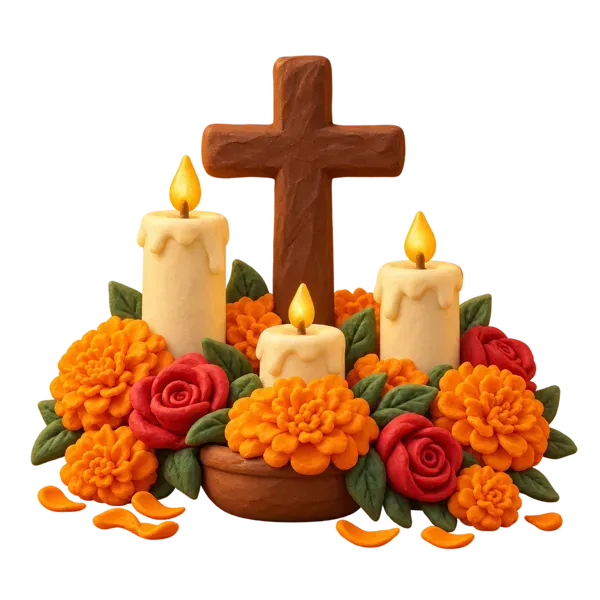
At the start of November, many families set up an ofrenda at home: photos of loved ones who have died, candles, golden marigolds called cempasúchil and the foods those people liked. This is the Día de Muertos, a family custom that grew over the centuries out of Indigenous traditions and the Catholic faith. It is a beautiful way to say that love does not end with death. The Church does not teach that the dead come back to eat what we leave for them, but she gladly welcomes any custom that fits the faith and remembers them with love and prayer. And she adds something more: two days to pray.
On 1 November the Church celebrates All Saints: all the men, women and children who are with God in heaven, including many whose names nobody knows. The last book of the Bible describes them as a great crowd from every nation, too many to count. The Church teaches that they are not far from us. We belong to one family, the communion of saints, and the saints in heaven pray for us.
On 2 November the Church remembers All Souls: everyone who has died. The Church teaches that those who die in God’s friendship are sure of heaven, but many still need to be made ready to see him face to face, a cleansing of love that we call purgatory. We cannot see this, but we are not helpless. Our prayers, and above all the Mass, can help those souls. Praying for the dead is a work of love, and Christians have done it since the earliest centuries.
Saint Monica lived this. For years she prayed and wept for her son Augustine, and she lived to see him baptized. Around the year 387 they were waiting in the port of Ostia, near Rome, for a ship to take them home to Africa, when Monica fell sick. Augustine tells in his Confessions that she told her sons not to worry about where she was buried. Only one thing mattered to her.
“At the Lord’s altar” means at the Mass, where the Church has always remembered her dead. Augustine kept his mother’s request. In the same book he asks everyone who reads it to remember Monica and his father at the altar. Her last wish was not for a grand tomb, but for prayer. This is what she said:
“Lay this body any where; let not the care for that any way disquiet you: this only I request, that you would remember me at the Lord’s altar, wherever you be.”
Bring it home
Put a photo of someone you love who has died where you can all see it, and light a candle if you can. Tell one story about them, then pray an Our Father together for them.