The Friday before Easter
Good Friday 2027: what it means and when it is
What do we remember on Good Friday?
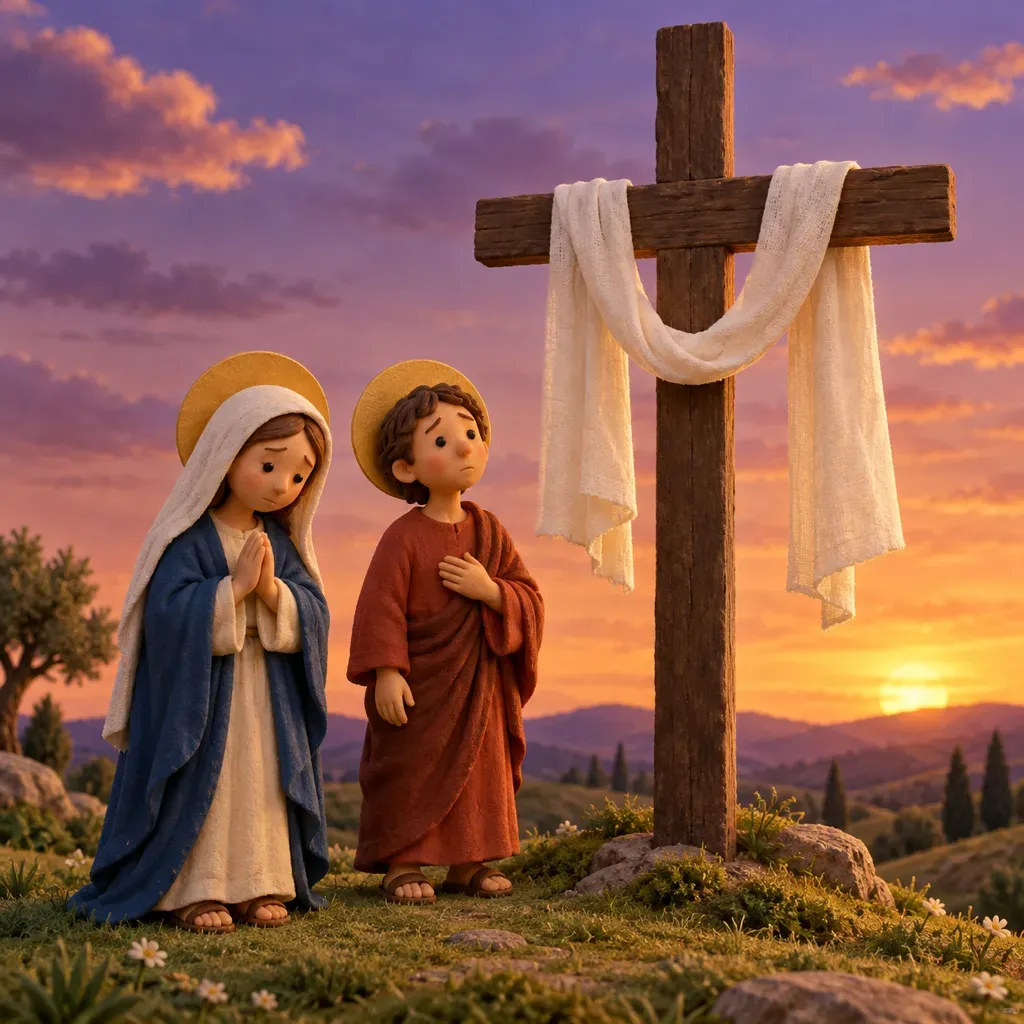
On Good Friday we remember the passion and death of Jesus on the cross. He gave his life freely, out of love for each of us, to save us from sin. It is a day of silence and prayer: there is no Mass, but the Celebration of the Lord’s Passion in the afternoon, and it is a day of fasting and abstinence. Its color is red.
When is it?
- 2027
- Friday, March 26, 2027
- 2028
- Friday, April 14, 2028
What happened that day
After the night in Gethsemane, Jesus was tried before the high priest and before Pilate, the Roman governor, who condemned him to die on a cross. He carried the cross to Calvary, outside Jerusalem, and there he was crucified. From the cross he forgave those who were killing him (Luke 23:34) and gave us his mother, who stood at the foot of the cross with the beloved disciple (John 19:25-27). At about three in the afternoon he gave up his spirit and died (Luke 23:44-46). He was buried that same day, before the Sabbath.
Why we call it good
It can seem strange to call the day Jesus died good. But the Church sees in the cross the greatest love there is: Jesus didn’t die by accident or against his will, he gave his life freely to bring us back to God. That is why Christians don’t hide the cross: we put it up in our homes and we kiss it, because we know how the story ends. On Sunday, Jesus rose from the dead.
How it is celebrated in church
There is no Mass on Good Friday. In the afternoon, ideally around three, the Church celebrates the Lord’s Passion: the priest, in red, begins in silence, lying face down or kneeling before the bare altar. The Passion according to Saint John is read, the Church prays for the needs of the whole Church and the world, and then each person comes forward to venerate the cross, with a genuflection or a kiss. At the end, people receive Communion from the hosts consecrated on Holy Thursday. It is a day of fasting for adults from 18 to 59, and of abstinence from meat for everyone from 14.
How it is kept in Mexico and Spain
In many towns and neighborhoods people pray the Way of the Cross through the streets, stopping at the fourteen stations of Jesus’ road to Calvary. In Iztapalapa, in Mexico City, the neighbors have acted out the Passion every year since 1843, and in San Luis Potosí and other cities the Procession of Silence goes out. In Spain, the brotherhoods carry pasos, floats with images of Jesus and of Our Lady of Sorrows, through the streets among hooded nazarenos, in processions of deep silence and devotion, as in Seville, Valladolid or Zamora. In many parishes a sermon is preached on the Seven Last Words, the last things Jesus said from the cross.
As a family
At three in the afternoon, stop for a few minutes of silence in front of a cross or a crucifix, at home or in church, and thank Jesus for his love. You can kiss the cross, as people do at the celebration. If you like, pray the Way of the Cross together.
To read more, the Catechism of the Catholic Church, paragraphs 613, 616, 618, 964, 1674, 2043.
Rosal has no lesson for Good Friday on its own. The Holy Week feast lesson, free for every family, tells it with the rest of the week, taught by Saint John the Apostle, who stood at the foot of the cross.